Showing posts with label Biography. Show all posts
Tuesday, July 18, 2017
Had She but Known by Charlotte MacLeod
Synopsis From Publisher:
In the decades since her death in 1958, master storyteller Mary Roberts Rinehart has often been compared to Agatha Christie. But while Rinehart was once a household name, today she is largely forgotten. The woman who first proclaimed “the butler did it” was writing for publication years before Christie’s work saw the light of day. She also practiced nursing, became a war correspondent, and wrote a novel—The Bat—that inspired Bob Kane’s creation of Batman.
Born in Allegheny City, Pennsylvania, before it was absorbed into Pittsburgh, and raised in a close-knit Presbyterian family, Mary Roberts was at once a girl of her time—dutiful, God-fearing, loyal—and a quietly rebellious spirit. For every hour she spent cooking, cleaning, or sewing at her mother’s behest while her “frail” younger sister had fun, Mary eked out her own moments of planning, dreaming, and writing. But becoming an author wasn’t on her radar . . . yet.
Bestselling mystery writer Charlotte MacLeod grew up on Rinehart’s artfully crafted novels, such as the enormously successful The Circular Staircase—“cozies” before the concept existed. After years of seeing Christie celebrated and Rinehart overlooked, MacLeod realized that it was time to delve into how this seemingly ordinary woman became a sensation whose work would grace print, stage, and screen. From Rinehart’s grueling training as a nurse and her wartime interviews with a young Winston Churchill and Queen Mary to her involvement with the Blackfoot Indians and her work as doctor’s wife, mother of three, playwright, serialist, and novelist, this is the unforgettable story of America’s Grande Dame of Mystery.
I don't think it will come as a surprise that when a friend of mine pointed out a cheap copy of this book, that I jumped at the chance to read a biography of Mary Roberts Rinehart. For those of you who don't know, next to Agatha Christie, Mary Roberts Rinehart is my second favorite mystery writer of all time. I never heard of her until Yvette of in so many words... did a review of The Circular Staircase. While reading her review, the plot sounded really familiar to me, and I quickly learned that one of my favorite movies, The Bat starring Vincent Price and Agnes Moorehead, was actually based off of a Rinehart novel. Actually, the movie is an adaptation of the The Bat, which was a novelization of a play of the same name, which was actually based off of The Circular Staircase. After that little discovery, I was hooked. I've since read and reviewed twenty-three of her books, and while I like some more than others, I would take them all over a lot of the "cozy" stuff being written today.
When I first started to delve into Had She But Known, which by the way is named after a major plot device used by Rinehart, I wasn't sure I was going to like it. The affection and admiration Charlotte MacLeod had for her subject was obvious from the start, almost too obvious. I understand that, for the most part, if someone is going to take the time to write a biography of someone else, that they are going to have to respect the subject, otherwise the writing would be a horrible experience. However, there should also be distance and objectivity between the writer and the subject, otherwise it can cloud the information coming across. If I can't trust you to be objective, how can I trust the information being given? Her admiration comes across too much, especially in the beginning, and just could have done without her commenting on the worth of individual Rinehart books. The language got too flowery and flattering at times, but thankfully I plowed through and I ended up loving the book.
What saved it for me was my own love for the subject. This is a writer whose work I enjoy so much, how could I not love exploring her life in far more detail than I ever had before. And what I discovered only heightened that admiration. From the way she handled herself as an overseas war correspondent during WWI, to the scrappy determination to do whatever it took to take care of her husband and three sons, I discovered a woman worthy of the admiration and respect Charlotte MacLeod so obviously heaped on her. It was interesting to read how some of my favorite novels came about, even the ones MacLeod didn't share my views of. It's hard to believe the speed at which some of these had been written, given the complexities of the plots.
Mary Roberts Rinehart became a household name in her day. From her exploits with Theodore Roosevelt, to her advocating for Indigenous tribes, to becoming one of the highest paid authors of her time, she did everything with a style all her own, and I wish that she somehow regains the popularity she enjoyed so long ago.
Friday, May 27, 2016
Lincoln in the World: The Making of a Statesman and the Dawn of American Power by Kevin Peraino
Part Of The Synopsis From Publisher:
This is the story of one of the most breathtaking feats in the annals of American foreign policy—performed by one of the most unlikely figures. Abraham Lincoln is not often remembered as a great foreign-policy president. He had never traveled overseas and spoke no foreign languages. And yet, during the Civil War, Lincoln and his team skillfully managed to stare down the Continent’s great powers—deftly avoiding European intervention on the side of the Confederacy. In the process, the United States emerged as a world power in its own right.
Engaging, insightful, and highly original, Lincoln in the World is a tale set at the intersection of personal character and national power. The narrative focuses tightly on five distinct, intensely human conflicts that helped define Lincoln’s approach to foreign affairs—from his debate, as a young congressman, with his law partner over the conduct of the Mexican War, to his deadlock with Napoleon III over the French occupation of Mexico. Bursting with colorful characters like Lincoln’s bowie-knife-wielding minister to Russia, Cassius Marcellus Clay; the cunning French empress, EugĂ©nie; and the hapless Mexican monarch Maximilian—Lincoln in the World draws a finely wrought portrait of a president and his team at the dawn of American power.
Somehow in all the reading I've done on American Presidents, I've managed to skip over President Lincoln, I've never read anything about him, including one of President Obama's favorite books, Team of Rivals by Doris Kearns Goodwin. I've read more about former First Ladies, than I've read about our 16th president. I'm glad that with reading Lincoln in the World, that glaring oversight has been taken care of.
President Lincoln's foreign policy tends to be overshadowed by domestic policy in most school history books, which is understandable given the plethora of issue that gave rise to the Civil War. To be quite frank, I can't remember a thing from either high school or college on the subject., and that's assuming they even taught us anything about it, and that's highly doubtful. With Lincoln in the World, I was given a chance to not only learn the history of what took place during his administration, but it's given me some insight into some of the foreign policy issues that are still facing us today.
This could have been a dry, boring book, spouting off dates and names. Instead, while it was meticulously researched and presented, it was engaging. The author took a ton of information, and was able to not only condense it, but explain it in such a way that made me feel like Goldilocks. Nothing was over my head, nothing was being dumbed-down to make me understand the implications of what I was reading, it was just right.
I received this book for free from Blogging for Books, for this review.
Wednesday, July 17, 2013
The Resurrectionist by E.B. Hudspeth
Synopsis From Dust Jacket:
Philadelphia, the late 1870s. A city of gas lamps, cobblestone streets, and horse-drawn carriages - and home to the controversial surgeon Dr. Spencer Black. The son of a grave robber, young Dr. Black studies at Philadelphia's esteemed Academy of Medicine, where he develops the unconventional hypothesis: What if the world's most celebrated mythological beasts - mermaids, minotaurs, and satyrs - were in face evolutionary ancestors of humankind?
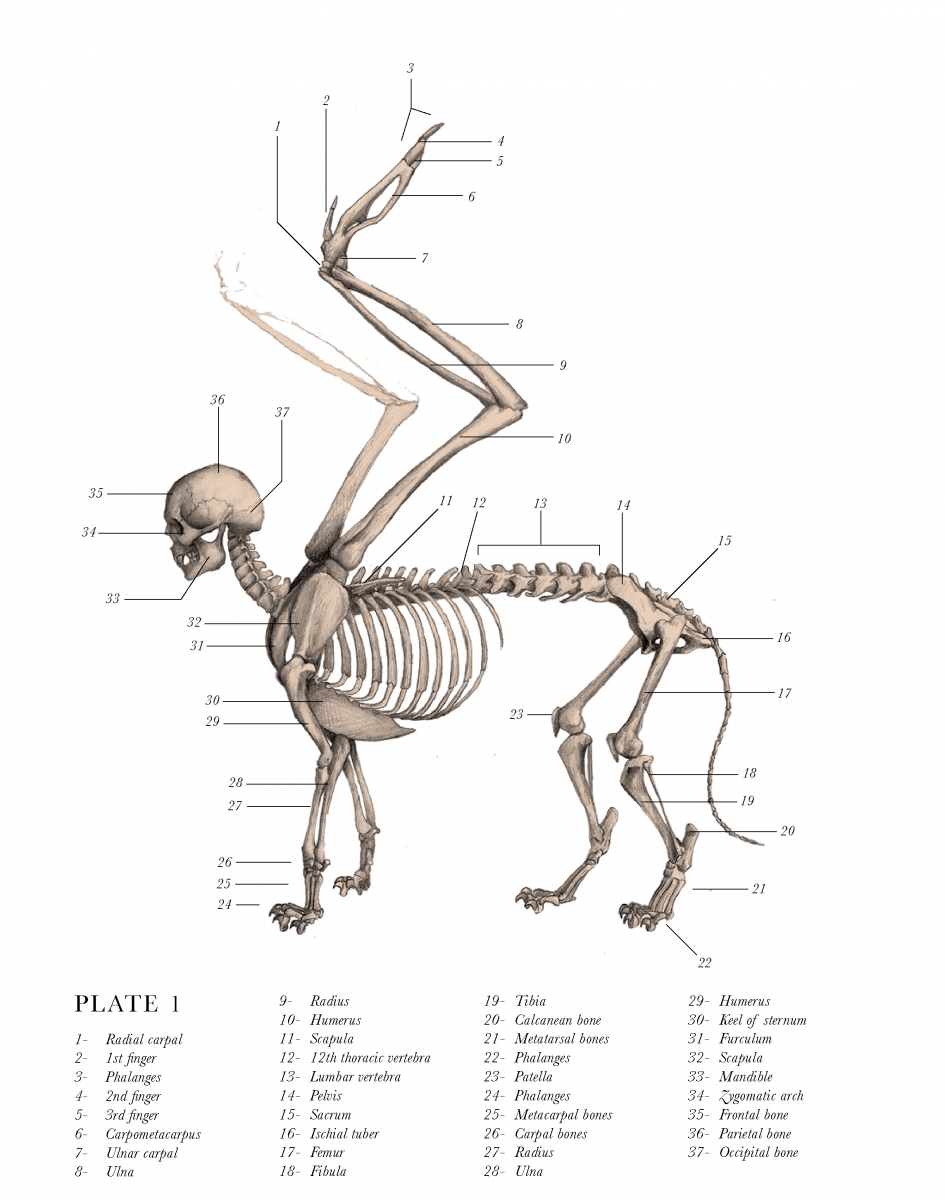
The Resurrectionist offers two extraordinary books in one. The first is a fictional biography of Dr. Spencer Black, from a childhood spent exhuming corpses through his medical training, his travels with carnivals, and the mysterious disappearance at the end of his life. The second book is Black's magnum opus: The Codex Extinct Animalia, a Gray's Anatomy for mythological beasts - dragons, centaurs, Pegasus, Cerberus - all rendered in meticulously detailed anatomical illustrations.
I'm really at a loss on how to start this review. The bigger problem, once I do get it started, I'm at an even bigger loss on where to go from there. And I'm really flabbergasted on how I would finish it off. I really don't know what to say about this one. I loved it, I was disappointed in it, I loved it some more, and then it sat on my shelf waiting to be reviewed. And therein lies the confusion I'm feeling.
The love started off with the concept of the book. The idea of creating a book around a fictional doctor who went over the deep end and decided that humans are descended from mythological creatures, it's pure genius. Then making that same doctor start experimenting of animals and humans in order to recreate those creatures, just brings it over the top. The first half of the book is this imaginatively, convoluted story of a man who takes a once promising career, and descends into madness. It's also the weakest half of the book, hence my disappointment.
Since it's a fake biography, I wanted the narrative to convince me that Dr. Spencer Black was in fact a real person. I wanted to become so engrossed in the story of his life that I would be able to forget he never existed. That never happened. I'm not sure I can really pinpoint the issues I had with the story itself. Some of it was the pace of the story, it was a bit jarring in places. I also think it was the fact that none of the characters around Dr. Black were fleshed out enough to provide a support system for his story. The pieces, which were there, never fit together.
And then the magic happened. When the codex starts, all the problems I had in believing the reality of the "biography", were forgotten. The anatomical details and the gorgeous way they were rendered by the artist, made me really believe that these creatures existed. They even came close to having me convinced that there could have been link between us at some point in time. I was, and still am, in awe of the details the illustrator was able to bring out in the creatures. If I could, I would love to have some of them enlarged, framed, and hung on my wall. I loved this section of the book so much, that had I written the review right away, it would have been glowing. I waited though, and that changed my outlook on it.
In the end, I'm just not sure the codex was able to overcome the issues I had with the "biography." I'm a reader, and I'm a reader that wants to get lost in the story. I want to be able to willingly suspend my disbelief and get transported to another place and time. I want to forget that I'm reading a fiction book. And sadly, that never happened for me. Had this been just a picture book, it would be my favorite of all time. As it is, it's going to sit in a permanent home on my shelves, and I'm sure I'll pull it out and look at the wonderful illustrations. I'm just not going to revisit the first half again.
Monday, April 1, 2013
Born on a Moutain Top: On the Road with Davy Crockett and the Ghosts of the Wild Frontier by Bob Thompson (Plus Giveaway)
Synopsis From Dust Jacket:
Pioneer. Congressman. Martyr of the Alamo. King of the Wild Frontier. As with all great legends, Davy Crockett's has been retold many times. Over the years, he has been repeatedly reinvented by historians and popular storytellers. In fact, one could argue that there are three distinct Crocketts: the real David as he was before he became famous; the celebrity politician whose backwoods image Crockett himself created, then lost control of; and the mythic Davy we know today.
In the road-trip tradition of Sarah Vowell and Tony Horwitz, Bob Thompson follows Crockett's footsteps from his birthplace in east Tennessee; to Washington, where he served three terms in Congress; and on to Texas and the gates of the Alamo, seeking out those who know, love, and are still willing to fight over Davy's life and legacy.
I came to know and love Davy Crockett in about the same manner as everyone else my age, or even thirty years older than me. It was watching Fess Parker play Davy Crockett for Disney, that made me fall in love with the adventures he had, and the kind of man he was. Parker's Davy was daring, generous, fearless, and about every other positive adjective I can think of. I wanted to go on his adventures and grow into the man he was. He was almost godlike to me as a kid, and all I wanted was that damn coonskin cap. I don't think I ever got that hat, but I never lost that feeling of adventure and awe that Davy, through Parker, instilled in me.
I was such a huge fan that when I finally had enough points with the Disney Movie Rewards program, the very first thing I ordered was the Davy Crockett Two Movie Set on DVD. At that point in time, my son had never seen anything about or knew who Davy Crockett was. When we got it in the mail, we fired it up, and I introduced my son to one of my childhood heroes. There is just something so magical about the way Fess Parker played him, because it got my son hooked on him and he wanted to know all about Davy, Colonel Travis, Jim Bowie, and all the rest of the heroes who died in the Alamo. I actually had to explain to him that Davy, though he is single handily fighting off the Mexican soldiers at the end of the movie, died. My son though he lived and prevailed since the image faded to black. He couldn't believe that this man, who he had just met, could die. This was a few years ago, and while my son isn't as fascinated by him as he was then, he will occasionally put the movie in, and relive the adventures all over again.
For me, watching them with my son, it brought back all the magic. I fell in love all over again. Now my love for Davy has never made me go out and do my own research into his life. I did buy a few children's books for my son after we had watched the movies for the first time, but I was never compelled to go out and read about the man himself. I think part of me was scared that if I got to know the real Davy Crockett, that some of the magic would go away. Even as a kid, I understood that the Davy I knew, was more myth like than real. That he had been built up into some sort of a demigod; much like Paul Bunyan, Pecos Bill, Johnny Appleseed, or John Henry. He was a creation of fact and fiction, and I was worried that some of the fact would overshadow that myth.
It's that separation that Bob Thompson was trying to do in his book, Born on a Mountaintop: One the Road with Davy Crockett and the Ghosts of the Wild Frontier. Much like myself, he first discovered Davy through Fess Parker and Disney and rediscovered him through his kids. Unlike myself, he was curious enough to set out on a journey to try and discover the real Davy Crockett, who the man was behind the myth. What he found out is that sometimes, it's very hard to figure that out.
Our history books are not only full of facts and dates, but they include a fair amount of guesswork, myth building, and a even a tiny bit of fiction. Those boundaries seem to be even further blurred when is comes to Davy Crockett. So much of what we know, or think we know, is myth and reality combined into a rather tangled skein, difficult to comb out. Thompson, through interviews, talking with Davy addicted historians, visiting site and landmarks important to the life of Davy Crockett, and investigation some of the source material himself, tries to do some combing on his own. Oftentimes he discovers enough to make a solid decision on whether something is fact, fiction, or a blending of the two. Other times, he is left with having to make an educated assumption, understanding he may have it wrong.
I'm not sure we will ever know the complete factual details of Davy Crockett's life, nor do I think we need to. We need our heroes, our demigods, almost as much as the Greeks and Romans did. We need men and women to elevate to a higher plane, people we can look up to and celebrate. I'm not sure how much can actually be accomplished if we were able to bring them back down to Earth. I think it's best they are left up in the stratosphere, it gives us, and future generations an example of how to live our lives.
Born on a Mountaintop: On the Road with Davy Crockett and the Ghosts of the Wild Frontier gives us some of those missing facts, dispels some of the myths, but keeps the magic intact. Bob Thompson was able to create this wonderful balancing act of finding out the truth, what he could anyway, and keeping the myth whole. He didn't hurt the legend of Davy Crockett through this book, he made it stronger and brought more color to it. He kept Davy Crockett magical for me, but gave me more information about who the man actually was.
The wonderful group at Crown Publishers have generously offered my readers the chance to win a hardcover copy of this book for themselves. The giveaway will last until 11:59 pm, CST, on 4/11/13. You must be a resident of the United States to enter, and all you have to do is leave me a comment with your email address.
Thursday, November 8, 2012
The Black Count by Tom Reiss
Part of Synopsis From Dust Jacket:
His swashbuckling exploits appear in The Three Musketeers, and his triumphs and trials inspired The Count of Monte Cristo - both books written by his son. Yet it is for one reason in particular that General Alex Dumas deserves to stand n history's spotlight: alone among his race, he rose to command vast armies - in an audacious campaign across Europe and the Middle East - and in his triumph and ultimate betrayal we see how dangerous one individual can be to an entire way of life.
Born to a black slave mother and a fugitive white French nobleman in Saint-Domingue (present day Haiti), Alex Dumas was sold into bondage but made his way to Paris, where he was schooled as a sword-fighting member of the French aristocracy. When the Revolution broke out, he joined the army at the lowest rank - yet quickly rose, through a series of legendary feats, to command more than 50,000 men.
No matter how high he soared, Dumas continued to live by his blade and his boldness in the face of overwhelming odds. Yet, because of his unwavering principles, he ultimately became a threat to Napoleon himself.
Dumas was on his way home from conquering Egypt when his ship nearly sank, and he was captured by a mysterious enemy, thrown into a dungeon, and subjected to slow poisoning. But the fate that awaited him when he escaped the dungeon would shock him even more.
I've been trying to figure out the first time I read The Count of Monte Cristo, the first time I fell in love with a story that has captivated my imagination ever since. As a young adult, I read it as an adventure. How could anyone resist the story of a man who is betrayed by those he thought he could trust, imprisoned for years, only to escape and exact revenge on those who harmed him. It's a brilliantly told tale, and now that I know the inspiration for the story, I'm in love with it all that much more.
Before this book, I never gave much thought to who Alexandre Dumas was, I knew nothing about his background, let alone that his father was once a a revered military man, a general who led troops into battle, and pulled off what some thought was the impossible. The fact that he was the bastard son of a French aristocrat and a freed slave, makes the real story of the father, that much more compelling.
When I read a biography, especially of someone I'm not that familiar with, I want it to entertain and inform. I want to know who the person was to the core, what made them who they are, what drove them to be the person someone would want to write a book about hundreds of years later. But what's more, I want a book that makes me want to read more after the last page is turned. I want to be inspired to continue my journey. I want to learn more about the topic of the biography, or even the events they found themselves surrounded by. Tom Resiss did all of that for me with The Black Count.
Not only do I want to know more about General Dumas, but I feel compelled to actually read more about the French Revolution and it's aftermath. As an American high schooler, we never really learned all that much about what happened. I think most Americans use A Tale of Two Cities as their main references point. From what I did know about it, I was appalled by the excesses and horrified by the sheer violence. This book didn't change that for me, actually it gave me even more reason for feeling the way I do. What The Black Count did, was make me want to know more about the workings of the Revolution, the issues behind it, and the people involved.
It also made me want to know more about a society that was capable of looking past the general's race, to raise him up to such heights. I want to know more about a France that I never knew about, a country that despite it's "familiarity" stills remains an enigma for most Americans. I want to know how a country could wrestle with race, create a handicapped system of equality, and then turn it's back on the gains it had made.
Now I'm not saying my next few years are going to be taken up with a serious study of French history and culture, but I will keep my eyes open for opportunities that will allow me to sate my curiosity. It will, on occasion, check to see if there are any new books about General Dumas or the French Revolution. I will google to see if France has erected a statue or honored the General for his service anytime soon. This will be a book I lend out, though I'm normally hesitant about doing so. This will be a book that stays on my shelves for years to come.
Tuesday, September 25, 2012
On a Farther Shore by Rachel Carson (Plus Giveaway)
Synopsis From Dust Jacket:
She loved the ocean and wrote three books about its mysteries, including the international bestseller The Sea Around Us. But it was her fourth book, Silent Spring, that this unassuming biologist transformed our relationship with the natural world.
Rachel Carson began work on Silent Spring in the lats 1950s, when a dizzying array of synthetic pesticides had come into use. Leading this chemical onslaught was the insecticide DDT, whose inventor had won a Nobel Prize for its discovery. Effective against crop pests as well as insects that transmitted human diseases such as typhus and malaria, DDT had at first appeared safe. But as its use expanded, alarming reports surfaced of collateral damage to fish, birds, and other wildlife. Silent Spring was a chilling indictment of DDT and its effects, which were lasting, widespread, and lethal.
Published in 1962, Silent Spring shocked the public and forced the government to take action - despite a withering attack on Carson from the chemicals industry. The book awakened the world to the heedless contamination of the environment and eventually led to the establishment of the EPA and to the banning of DDT and a host of related pesticides. By drawing frightening parallels between chemicals and the then-pervasive fallout form nuclear testing, Caron opened a fault line between the gentle ideal of conservation and the more urgent, new concepts of environmentalism.
I don't know how everyone else does it, but I don't seem to have any consistent method of choosing which review requests to accept, and which I decline. I have, on a few different occasions, attempted to come up with a "scientific" apparatus to make those decisions for me, but I tend to throw those misguided attempts right out the window. Instead I tend to pick my review books based on if the subject/premise interests me or if I have an emotional reaction to the idea of reading the book. I'm hoping that's how most of you do it, but if not, I'm going to feel out of the loop. For the most part, with some serious exceptions, this process has worked for me. With On a Father Shore, the idea of choosing a review request based on an emotional impulse, has me thinking I have the perfect system in place.
To tell you the truth, this wasn't a book I picked up as soon as I got it. I seemed to be going through a reading slump at the time and I just couldn't get all that interested in anything I had agreed to review. A few days later I finally picked it up and read about the first chapter and a half and then put the book back down and forgot about it. It's not that I didn't like what I was reading, it was more of that feeling we all get when we have read too many review books in a row. Then on a Tuesday morning, September 4th to be exact, I happened to be listening to The Diane Rehm Show on NPR, go figure, and she was interviewing William Souder, the author of On a Farther Shore. I couldn't quit listening to the interview, which I found to be informative and emotionally (there is that word again) compelling. It was just the catalyst I needed to pick the book back up and delve into the life of Rachel Carson.
I have not had the opportunity to read the author's previous two books, but I would have to assume that they are as engaging as this one. There is a gentleness to the narrative that if found to be the perfect way to Rachel Carson's story. I'm not sure if that is his normal tone in writing a book, or if it was in response to his subject. I'm not sure gentle is the right word to use here, but whatever the sentiment I'm trying to convey, it seems like an apt description to explain the the subject of this book.
On a Farther Shore is one of those books that I would find hard to shelf in a bookstore. It's a combination of biography, history, science, and public policy. It would feel at home in any of those sections, and I'm almost sure Rachel Carson would make sure it was shelved in all those sections. Mr Souder does a masterful job of not only detailing the life of Rachel Carson, but the influences behind her work and the process she took in writing her books. He explores the subjects behind her books in such a way, that I feel smarter for reading it. I can honestly say I now know more about our country's history with nuclear testing and pesticide use than I ever even fathomed before.
One of the side benefits or reading a book like this, is how it tends to add to your reading list. I have so fallen in love with and admire the Rachel Carson that the author presents to us, that I have now added her four books to my wishlist. I have also added a few other books that inspired her to be, from what I've read, a lyrical writer who was able to draw her readers into dense subjects and complicated issues. She is the type of writer that is a joy to read, and I'm sure she was the type of reader it would be beneficial to emulate.
Now for the giveaway. I have one copy, generously offered by the publisher, up for grabs. If you are interested in entering, please leave a comment with your email address. The giveaway is, I believe, only open to residents of the US. You will have until 11:59 pm CST, on October 9th to enter. I will use random.org to pick the winner.
Friday, June 29, 2012
Rather Outspoken by Dan Rather & Digby Diehl
Part Of The Synopsis From Dust Jacket:
For half a century, Dan Rather has covered the major news stories of our time: the civil rights movement, the assassination of JFK, Vietnam, Watergate, 9-11, Iraq, Afghanistan, Abu Ghraib. For 24 of those years, he was the network "face" of TV journalism as the anchor of the CBS Evening News.
At the end of his tenure, he became part of the news himself. Now for the first time, Dan tells the real story of his final months at CBS, including his removal from the anchor chair in the wake of the controversy surrounding the story of George W. Bush and the Texas Air National Guard. He also exposes the frantic and secret behind-the-scenes machinations that followed. These clandestine maneuvers unmasked the "independence" of the investigation by the Thornburgh commission, revealing a News Division that had, Rather believes, temporarily abandoned its principles in order to enhance the bottom line of the parent company.
I was going to start this review off with the last paragraph, but after some more thought, I decided it wouldn't be a fair way to start things off. Instead I'm going to admit why I wanted to read this particular book. I think, like most people who have picked Rather Outspoken up, I was wanting to hear Dan Rather's account of what happened behind the story that brought an end to his career at CBS. For that reason alone, I think this book is worth the read.
I was never one of those who thought Mr. Rather or his producers did anything wrong in their coverage of the story. From everything I knew then, and know now, what happened to them felt like a raw deal. Now that I've read the book, and understand everything that went on behind the scenes, I'm even more convinced that Mr. Rather paid a steep price for telling the truth. His account of the way political and business pressure interfered in the way news was and is being told, scares the hell out of me. It should scare everyone who cares about the public's right to know what our government does and how our corporations behave. His story is not only an example of what can happen when things go wrong, but it's a call to arms. It's a defense of the concept that journalism should be separated from politics and business considerations. Sadly, I think it's a call to arms that has come just a bit too late.
I almost wish that this memoir only dealt with that one situation. I would love to be able to divide that aspect from the rest of the book. But I can't. I have never gone into a memoir/biography with a higher opinion of the subject, than I had when I turned the last page. It's been a fear I've had for years, so now that it's finally here, all I can say is that it made me sad. I hate the idea that I can read a book and come away with less respect for someone. But less respect is what I'm left with. I know it's hard for anyone writing a book about themselves to leave their ego out of it. A good writer should be able to minimize the way that ego is expressed and how it will come across on the page. I'm not sure what happened, but it seems as if the opposite took place. Instead of the ego being minimized, it seems as if the ego was expanded and forced into every sentence. I can't imagine someone in Mr. Rather's place wouldn't have a good sized ego, I just dont' want to be reminded of it on every page. I'm positive that Mr. Rather is a terrific journalist, has covered stories in such a way that made a difference, and is an all around great guy. I just don't want Mr. Rather telling me that himself. Let it come across in the storytelling, not in the tonal voice of the narrative.
That ego got in the way of everything else for me. It kept what should have been an informative read from being anything other than a justification of his life. I don't think there is anything inherently wrong with that last concept, I just wish wish he would have been able to mesh the two ideas together in such a way that didn't leave me feeling cooler towards him.
Friday, December 2, 2011
A Train In Winter by Caroline Moorehead
Part Of Synopsis From Back Cover:
They were teachers, students, chemists, writers, and housewives; a singer at the Paris Opera, a midwife, a dental surgeon. They distributed anti-Nazi leaflets, printed subversive newspapers, hid resisters, secreted Jews to safety, transported weapons, and conveyed clandestine messages. The youngest was a schoolgirl of fifteen who scrawled "V" for victory on the walls of her lycée; the eldest, a farmer's wife in her sixties who harbored escaped Allied airmen. Strangers to each other, hailing from villages and cities from across France, these brave women were united in hatred and defiance of their Nazi occupiers.
Eventually, the Gestapo hunted down 230 of these women and imprisoned them in a fort outside Paris. Separated from home and loved ones, these disparate individuals turned to one another, their common experience conquering divisions of age, education, profession, and class, as they found solace and strength in their deep affection and camaraderie.
In January 1943, they were sent to their final destination: Auschwitz. Only forty-nine would return to France.
I have been reading a lot of great books, both non fiction and fiction, that deal with WWII. It's not a subject I had sought out on purpose, but for some reason I was presented with books this year that I could not turn down. For the most part, they blew me away with their narrative voices and I walked away feeling as if I had not only learned something, but my emotional thinking was altered as well. So when I agreed to review A Train In Winter, I was betting on the same thing happening. I wish that that bet would have payed off.
It's not that I didn't find the story being told compelling, because I did. I found the women (and men) featured in this book to be both heroic and engaging. What happens to them after they are captured broke my heart and reaffirmed for me the inhumanity that we, as a species, can show to each other. They are true heroes and deserve all the recognition and honor that we can bestow upon them. My issue with the book, and I'm sure it's more of me comparing this book to others that I have read this year, is the tone of the narrative voice.
I don't think cold is the right word for it, but it comes close to the way I reacted to it. In the beginning of the book the author throws a lot of names, dates, and events at the reader, hoping that he/she will be able to follow along and not get bogged down in facts. The author shows her skill as a biographer and historian, but the human side of the story seems to get lost in the shuffle. There are moments where the women shine through the recital, but it's pretty sparse. As the book continues, the narrative changes a bit, especially after the women are captured and put into the camp. But even then, as the women take more shape and the author lets us to get to know them on a more personal level, there still seems to be a level of detachment there that I was just not able to get over.
I'm glad I read the book and even happier to learn even more about a period of history that seems to, the more time passes, get glossed over in our schools. The women whose stories are being told, deserve to be remembered for their courage and strength. I just wish I had been able to connect with the author's style a bit more.
I would like to thank Trish of TLC Book Tours for the opportunity to read/review this book. Please visit the tour page to read other reviews.
Friday, December 3, 2010
The Book of the Dead by John Lloyd & John Mitchinson
Part Of The Synopsis From Dust Jacket:
As the authors themselves say, “The first thing that strikes you about the Dead is just how many of them there are.” Helpfully, Lloyd and Mitchinson have employed a simple—but ruthless—criterion for inclusion: the dead person has to be interesting.
Here, then, is a dictionary of the dead, an encyclopedia of the embalmed. Ludicrous in scope, whimsical in its arrangement, this wildly entertaining tome presents pithy and provocative biographies of the no-longer-living from the famous to the undeservedly and—until now—permanently obscure.
Organized by capricious categories—such as dead people who died virgins, who kept pet monkeys, who lost limbs, whose corpses refused to stay put—the dearly departed, from the inventor of the stove to a cross-dressing, bear-baiting female gangster finally receive the epitaphs they truly deserve.
Out of the ninety billion humans that lived and died on this planet, the authors narrowed it down to just shy of 70 who whether famous or not, lived some of the most compelling lives you would ever want to read about. This was a fun book that allowed me to learn more about figures that though familiar with, I didn't know all that much about. Issac Newton, Ada Lovelace, Nikola Tesla, Tallulah Bankhead, and General Antonio Lopez de Santa Anna, are just some of the notable historical figures that I learned more about in this book than I ever did in high school or college.
As enjoyable as that is though, what I really loved about this book is that I was introduced to people I had never heard of before, but should have know about. I met Edward Jenner, an English doctor, who discovered a way to eradicate smallpox. This is a man we should have learned about in school or in college at least and I never heard of him until this book. I also met Mary Seacole, a Jamaican born woman who did so much to help out the troops during the Crimean War. She is a fascinating woman and I have every intention of hunting down her autobiography, The Wonderful Adventures of Mrs. Seacole in Many Lands.
My reading wish list has grown quite a bit since I read this book. I've also added two books written by another woman I first met within these pages. Mary Kingsley was a one of the first women to explore Africa and considering she was from the Victorian era, that's quite a feat. She wrote two books, Travels in West Africa and West African Studies, and they are both books that I now want to read. I'm also going to see if I can find any work by the Portuguese write Fernando Pessoa. The man wrote, mainly unpublished even today, under a hundred different names. The most amazing thing is that the writing style was completely different for every name. I'm utterly fascinated by it and want to learn more.
This was a fun, engaging book that while not being able to give complex biographies of those humanized within it's pages, gives the reader a real sense of who these people were. At least for me, it gave me all the more reason to keep reading about them to find out even more.
I found a short interview with the authors over at NPR if anyone cares to listen to it.
Thursday, October 7, 2010
Washington: A Life by Ron Chernow
Part Of The Synopsis From The Back Cover:
In Washington: A Life celebrated biographer Ron Chernow provides a richly nuanced portrait of the father of our nation. With a breadth and depth matched by no other one volume life of Washington, this crisply paced narrative carries the reader through his troubled boyhood, his precocious feats in the French and Indian War, his creation of Mount Vernon, his heroic exploits with the Continental Army, his presiding over the Constitutional Convention, and his magnificent performance as America’s first president.
Part of the reason why I wanted to review this book was that despite a decent education, I'm not all that familiar with who George Washington was as a person or a General. I think I was one of many Americans, that according to this book, viewed George Washington as a lifeless waxwork, worthy but dull. Those are the author's words, not mine, but honestly, I would have to agree with him. All I can remember from school is that he was Commander in Chief of the Continental Army, stayed at Valley Forge, crossed the Deleware, and became our first president. Yeah, that's about it. I respected him as one of the founding fathers, but really didn't know who he was as a person. So as you can tell I'm not a scholar of American history so my review may be a little more pedistrain than some others you may read. What I am though is someone who wanted to get to know the man, not the legend.
After reading 815 pages, I can honestly say that not only do I know him better, but I have a lot more respect and admiration for him. The author has done a masterful job of bringing our first president to life in a way I wasn't expecting. Washington is portrayed as an ambitious man who is in a constant state of war with himself. He is a very passionate person but he has such a tight control on his outward manifestations of that passion, that many people never saw that side of him. He was a very guarded person whom inspired respect and admiration but very little affection.
He was a man sensitive to station and rank and never really got over the snubs he suffered during the French and Indian War. Because he was a colonist, he was never granted to the same respect or commission that a British born officer would have. That disparity rankled him and fueled some of his anti British feelings later on in life.
His personality in general was just fascinating to read about. He grew up never receiving a proper education and that bugged him for the rest of his life. The early death of his father and oldest brother stayed with him as did his cool relationship with his mother. Washington was an imposing 6 foot tall and by all accounts a dashing individual. He was a ladies man who loved to flirt but had a deep and meaningful relationship with his wife Martha. Though he was a slave owner he was conflicted on the subject and tried his best to not split families apart, but wouldn't tolerate runaways. This was an attitude he carried into the military as well. The man this book paints for us is intelligent, committed, loyal, but most of all human. He has come down from that marble pedestal and become mortal once again. I think his legacy is served mightily by that.
As you can tell I'm trying to give you a small taste of the man I met within this book but I don't want to go into a lot of it. For one I'm not sure I would ever be able to get across all of it, nor do I think you want to read that long of a post about it. What I do want to do is encourage you to read this book and discover for yourself that George Washington truly does deserve not only our respect and admiration, but our affection as well.
I would like to thank Trish of TLC Book Tours for the opportunity to review this book. You can visit the tour page to discover other reviews and to learn more about the author.
Friday, September 3, 2010
The Disappearing Spoon by Sam Kean
Synopsis From Dust Jacket:
Why did Gandhi hate iodine (I, 53)? Why did the Japanese kill Godzilla with missiles made of cadmium (Cd, 48)? How did radium (Ra, 88) nearly ruin Marie Curie's reputation? And why did tellurium (Te, 52) lead to the most bizarre gold rush in history?
The periodic table is one of our crowning scientific achievements, but it's also a treasure trove of passion, adventure, betrayal, and obsession. The fascinating tales in The Disappearing Spoon follow carbon, neon, silicon, gold, and every single elements on the table as they play out their parts in human history, finance, mythology, conflict, the arts, medicine, and the lives of the (frequently) mad scientists who discovered them.
Why did a little lithium (Li, 3) help cure poet Robert Lowell of his madness? And how did gallium (Ga, 31) become the go-to element for laboratory pranksters? The Disappearing Spoon has the answers, fusing science with the classic lore of invention, investigation, discovery, and alchemy, from the big bang through the end of time.
Why wasn't this book around when I was taking Chem I and Chem II in college? I floundered in those classes. If I remember right I only passed one test between both of them, and that was with a 61. Thankfully I had a rather understanding professor who would call me into his office twice a semester and question me about what I was learning out of the class. He gave me a C for each class. Now would this book have helped me with my grades, I doubt it, but it would have made some of the math a little more understandable for me.
Now this isn't a hard science book at all, which you should be able to tell by the synopsis. This was a fun romp, and more importantly for me a romp that was easy to understand, through the history of the periodic table. It didn't just cover how and when every element was discovered but the personalities behind those doing the hard work. I think I learned more about Marie Curie and other famous scientists in this book than I ever did in all the years of school.
The best part of this book though was how it brought the science to life. It helped you to understand the significance of each element through the specialness of each one. It was science book rolled into a celebrity memoir and finished off with a great poly sci case study. In what other book would I learn why India has such a problem with iodized salt and that aluminum (aluminium) used to be the most precious metal in the world.
Subscribe to:
Posts (Atom)
Two Week Hiatus
I’ve been dealing with eye strain and general tiredness for a few months now, which is part of the reason my posting has slowed down a bit ...
-
The last list from TV Guide that I shared with you guys, showcased their picks for the 60 sexiest couples to ever grace a TV screen. ...
-
Now this is going to sound so random and so last minute, but I didn't decide to participate in Armchair BEA this year until a few ...